
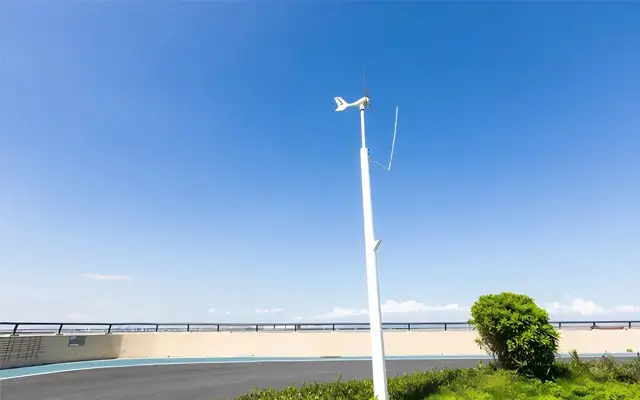
Researchers at the Fraunhofer Institute for Applied Polymer Research (Fraunhofer IAP), together with the BBF Group, have introduced a new rotor design aimed at improving the efficiency of small wind turbines. Early reports suggest it could allow turbines to operate more effectively in low wind speed conditions.
Rather than pushing for higher rated power, this project focuses on a more practical issue: how reliably a turbine can start and keep generating electricity when wind is weak or inconsistent. In many residential and distributed energy setups, this has been a persistent challenge.
Why Rotor Weight Makes a Big Difference
In real-world installations, small wind turbines often struggle not because of the generator itself, but due to rotor inertia. Traditional blades, usually foam-filled or solid inside, tend to be heavier. This extra weight can make it harder for turbines to respond to fluctuating wind.
The Fraunhofer team’s approach is different. Their rotor uses a hollow internal structure, placing material only where it is needed for strength. As a result, the rotor is lighter and appears to require less wind energy to begin spinning. In practice, it can start sooner and maintain rotation more smoothly—though exact performance will depend on local wind conditions.
Moving from Lab Figures to Real Energy Output
Small wind turbines are often marketed based on rated power, but these numbers rarely reflect what happens in everyday conditions. What matters more is how often the turbine actually produces energy over time. According to the researchers, reducing rotational inertia plays a key role in improving annual energy yield, especially in areas where wind rarely reaches nominal levels.
It’s worth noting that hollow rotors are not the only solution, but they highlight a broader trend in the small wind sector: focusing on usable, real-world performance rather than theoretical benchmarks.
Implications for Residential and Distributed Energy Systems
As households and small businesses increasingly combine wind and solar power, expectations for small turbines are changing. Reliability, low startup wind speed, and long-term operation have become more critical than maximum output under ideal conditions.
Design strategies that emphasize lightweight structures and smart material use are gaining traction. These approaches are not limited to research labs; manufacturers and system integrators report that turbines built this way often perform more consistently in field installations.
Industry Insight: Structural Design Over Nominal Ratings
From the perspective of small wind system providers, rotor and blade optimization has grown in importance. Field experience shows that turbines designed for low cut-in wind speed and durable blades often outperform those focused solely on high nominal power.
This observation aligns with experience at ELEGE Wind Turbine, where data from residential and farm-based systems suggest that structural design and material selection are as important as rated power. In many cases, small differences in rotor weight or blade composition can noticeably affect annual energy output.
A Practical Step Forward
The collaboration between Fraunhofer IAP and BBF Group demonstrates how advances in materials science and rotor engineering can have tangible benefits for small wind turbines. Further field testing will clarify their full impact, but the direction is clear: to remain practical, small wind technology must adapt to real-world operating conditions, not just laboratory benchmarks.